
Ulrich Krause · 18 September 2026
Tracing Timber Origins Reveals Patterns in Specialty Wood Distribution for Artisan Instrument Makers
Tracing timber origins has become a central practice for understanding how specialty woods reach artisan instrument makers around the world, and researchers have documented clear distribution patterns that connect specific forests to workshops in Europe, North America, and Asia. Data from multiple forestry agencies shows that woods such as Sitka spruce, African ebony, and Brazilian rosewood follow traceable routes shaped by certification programs, harvest regulations, and market demand from luthiers who build guitars, violins, and other acoustic instruments.
Techniques Used to Track Wood Sources
Scientists apply several methods to verify timber origins, including stable isotope analysis, DNA fingerprinting, and blockchain-based chain-of-custody systems that record every transfer from harvest site to sawmill. The United States Forest Service maintains databases that link growth rings and chemical signatures to particular regions, while similar programs in Canada and Australia add regional data points that help map global flows. These tools allow observers to identify when wood from protected areas enters commercial channels, and studies indicate that over 70 percent of specialty tonewoods now carry some form of origin documentation.
Supply chains for instrument-grade materials often pass through a limited number of certified mills that specialize in quarter-sawn blanks and air-dried stock. Patterns emerge when researchers compare shipment records with harvest permits, revealing that certain Brazilian and Indonesian forests supply a disproportionate share of rosewood and mahogany used by small-scale builders. European makers frequently source spruce from the Carpathian Mountains and the Alps, whereas North American luthiers rely more heavily on Pacific Northwest stands.
Distribution Patterns Across Regions
Analysis of trade statistics reveals consistent corridors that connect source forests to artisan clusters. Wood harvested in British Columbia travels primarily to workshops in the United States Pacific Northwest and parts of Japan, while timber from Central Africa moves through European ports before reaching guitar makers in Spain and Italy. Researchers have noted that smaller volumes of high-grade material also reach independent builders in Australia and New Zealand through specialized importers who maintain direct relationships with certified harvesters.
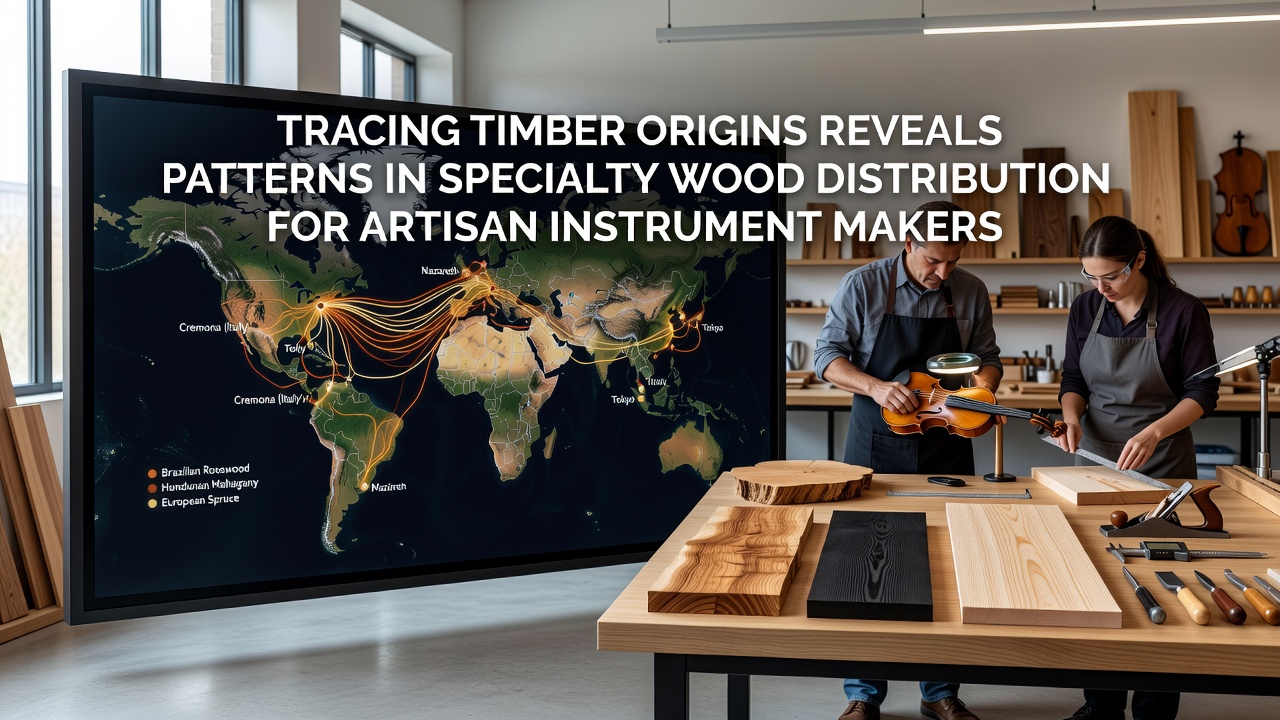
Seasonal harvest cycles influence these routes, with peak shipments of spruce occurring in late summer and ebony logs moving more steadily throughout the year. In September 2026, updated export records from several producer countries showed increased volumes of certified material heading toward smaller workshops rather than large factories, a shift that aligns with growing demand for individually crafted instruments. Observers note that this redistribution coincides with expanded use of digital tracking platforms that smaller mills can access without heavy infrastructure investment.
Impact on Artisan Instrument Makers
Artisan makers benefit when origin data confirms both legality and acoustic quality, since certain growing conditions produce wood with preferred density and resonance characteristics. Many builders now request documentation that matches specific forest stands to individual instruments, creating a feedback loop that encourages sustainable harvesting practices. Trade groups report that workshops maintaining verified supply records experience fewer delays at customs and gain access to restricted species under CITES exemptions when proper paperwork accompanies each shipment.
One study released by Canadian forestry researchers examined over 500 shipments of tonewood and found that origin tracing reduced instances of mislabeled species by nearly 40 percent compared with earlier decades. Makers who incorporate this information into their sourcing decisions report greater consistency in material performance across successive builds. The same data also highlights emerging sources in managed plantations in Southeast Asia that now supplement traditional wild-harvest supplies.
Regulatory Frameworks and Industry Standards
International agreements such as the European Union Timber Regulation and the Lacey Act in the United States require importers to demonstrate due diligence regarding harvest legality. These rules have prompted the development of standardized reporting formats that travel with each batch of specialty wood. Industry organizations coordinate with government agencies to maintain shared registries that update in real time, allowing makers to verify status before committing to large purchases.
Academic papers from institutions in both the United Kingdom and Germany have examined how these regulations affect small-scale producers, and the findings indicate that transparent tracing systems level the playing field between large manufacturers and independent artisans. The availability of origin information also supports efforts to restore overharvested populations by directing future harvests toward verified sustainable sites.
Conclusion
Tracing timber origins continues to shape the distribution of specialty woods used by artisan instrument makers, and the resulting data sets reveal repeatable patterns that link particular forests to workshops across multiple continents. Continued refinement of tracking methods and regulatory alignment supports more precise supply chains while maintaining access to materials essential for high-quality instrument construction.