Harper Albrecht · 16 October 2026
How Climate Shifts Alter Density Patterns in Specialty Hardwoods Sourced for Custom Acoustic Builds
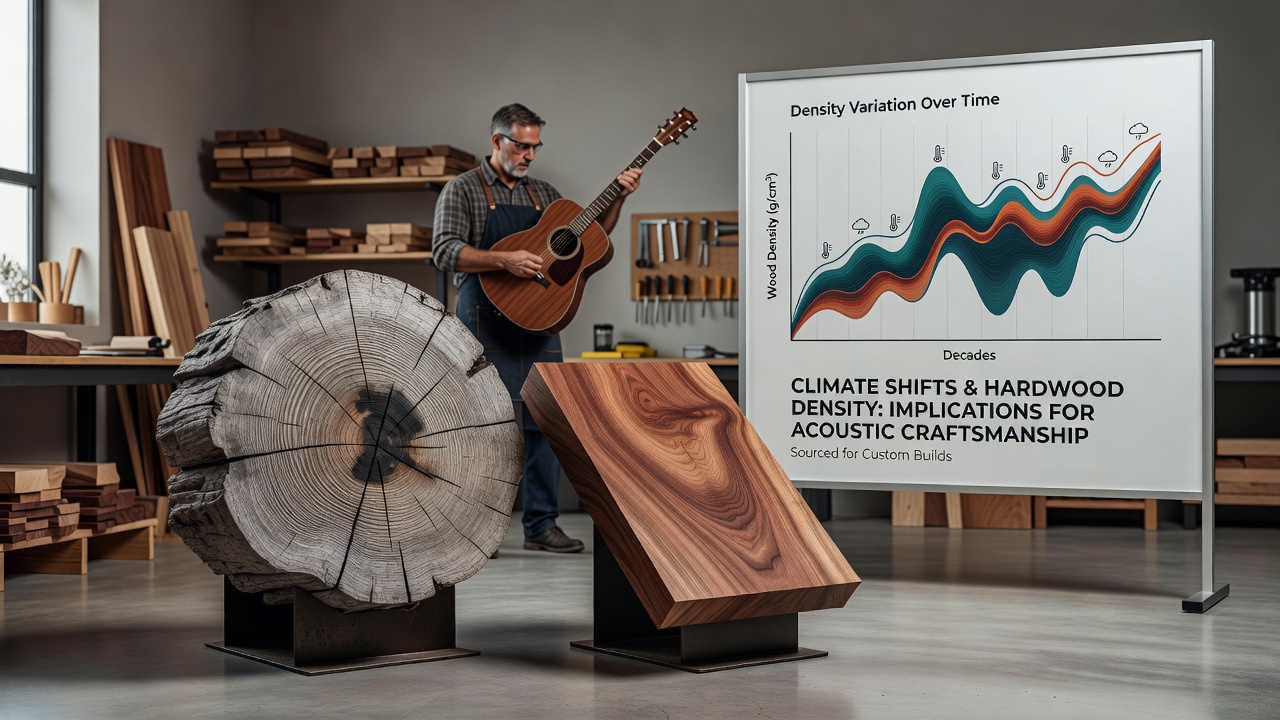
Climate shifts have begun reshaping the physical properties of hardwood species that instrument makers rely on for acoustic instruments, and researchers track these changes through long-term forestry data sets collected across multiple continents. Temperature increases combined with altered precipitation patterns affect tree growth rates, which in turn modify the annual ring structure and overall wood density in species such as maple, walnut, and various spruces used for tops, backs, and necks. Data from monitoring networks show that warmer growing seasons often produce wider earlywood bands with larger cells, resulting in lower average density measurements per cubic centimeter.
Wood Density Basics in Acoustic Applications
Specialty hardwoods deliver specific acoustic qualities because their density influences vibration transmission and resonance frequencies, while builders select pieces based on measured specific gravity and stiffness-to-weight ratios. Lower density woods tend to vibrate more freely yet may lack the structural rigidity needed for sustained projection, whereas higher density sections provide brighter tones at the cost of added mass. Studies compiled by the USDA Forest Service indicate that a 5 to 10 percent shift in average density can alter the fundamental frequency response of a guitar top by several hertz, enough to change how luthiers grade and pair individual boards.
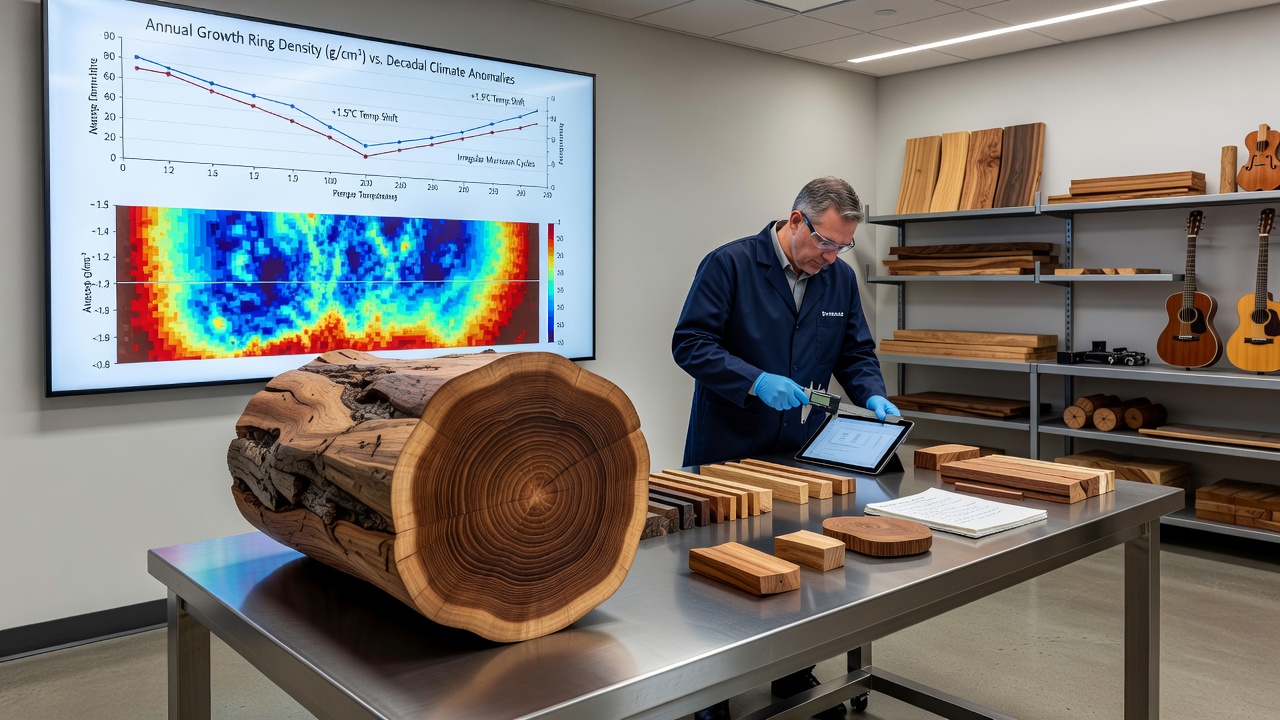
Annual growth rings record environmental conditions each season, and the proportion of dense latewood to porous earlywood determines the final material performance. When climate conditions extend the growing period or increase water availability during cell formation, the latewood proportion often decreases, producing timber with more uniform but lighter cellular structure. Conversely, drought stress compresses growth and raises the latewood ratio, elevating overall density in some temperate hardwoods.
Observed Effects from Temperature and Precipitation Changes
Long-term records from European and North American sites demonstrate that rising average temperatures since the early 2000s correlate with measurable declines in wood density for several oak and maple populations. In regions experiencing milder winters and earlier springs, trees initiate growth sooner yet encounter more variable summer moisture, leading to inconsistent ring widths year over year. Figures released by the Canadian Forest Service in 2025 reveal density reductions of 3 to 7 percent in sugar maple samples collected from southern Ontario stands compared with samples from the same sites two decades earlier.
Altered rainfall patterns further complicate the picture, since prolonged dry spells reduce photosynthetic activity and limit cell expansion, while sudden heavy precipitation events can cause rapid diameter growth that dilutes density. Observers note that these opposing forces create greater variability within individual trees, making it harder for suppliers to deliver consistent stock for custom builds. As of October 2026, updated satellite-derived vegetation indices continue to track expanding areas of reduced wood density in hardwood forests across the Appalachian range and parts of Central Europe.
Species-Specific Responses and Sourcing Patterns
Sitka spruce and Engelmann spruce, prized for their high stiffness-to-weight ratios in soundboards, show pronounced sensitivity to summer temperature anomalies, with warmer conditions linked to decreased latewood density according to research from the University of British Columbia. Black walnut and cherry used for backs and sides exhibit different reactions, often developing slightly higher densities under moderate drought stress because of increased extractive content in cell walls. These species-level differences mean that sourcing strategies must account for regional climate histories rather than relying solely on species averages.
Supply chains for custom acoustic builds now incorporate more frequent density testing at harvest sites, and mills in the Pacific Northwest and Appalachian regions have adjusted grading protocols to flag boards falling outside traditional density ranges. Trade data from the International Tropical Timber Organization indicate rising interest in alternative species from managed plantations in Australia and New Zealand, where climate conditions currently support stable density profiles in certain eucalyptus and acacia varieties. Builders who once sourced exclusively from North American or European forests increasingly evaluate these newer options to maintain consistent acoustic performance.
Measurement Techniques and Industry Adaptation
Non-destructive testing methods such as acoustic velocity measurement and X-ray densitometry allow mills to quantify density variations without damaging valuable stock, and these tools have become standard in facilities supplying instrument-grade material. Researchers at the Swedish University of Agricultural Sciences have published protocols showing that portable acoustic devices can predict density with accuracy comparable to laboratory gravimetric methods, enabling real-time sorting during processing. Such techniques help maintain traceability as climate-driven changes accelerate across source regions.
Forestry agencies in multiple countries now integrate climate projection models into harvest planning, and some cooperatives provide buyers with density trend reports tied to specific stands. These reports draw on decades of core samples and allow instrument makers to anticipate future material characteristics rather than reacting after stock arrives at the workshop. The result is a gradual shift toward diversified sourcing that balances traditional species with emerging options whose density profiles remain within acceptable acoustic parameters.
Conclusion
Climate shifts continue to modify growth dynamics in hardwood forests that supply specialty material for acoustic instruments, and the resulting density variations require updated measurement and selection practices throughout the supply chain. Data from government forestry services and academic monitoring programs document these changes across multiple species and regions, while industry participants respond with refined testing protocols and broader sourcing networks. Continued collection of ring analysis and climate correlation data will support more precise predictions of future wood properties for custom builds.