Alex Krause · 2 October 2026
How Blockchain Ledgers Are Changing Material Verification for Remote Woodworkers in Niche Instrument Markets
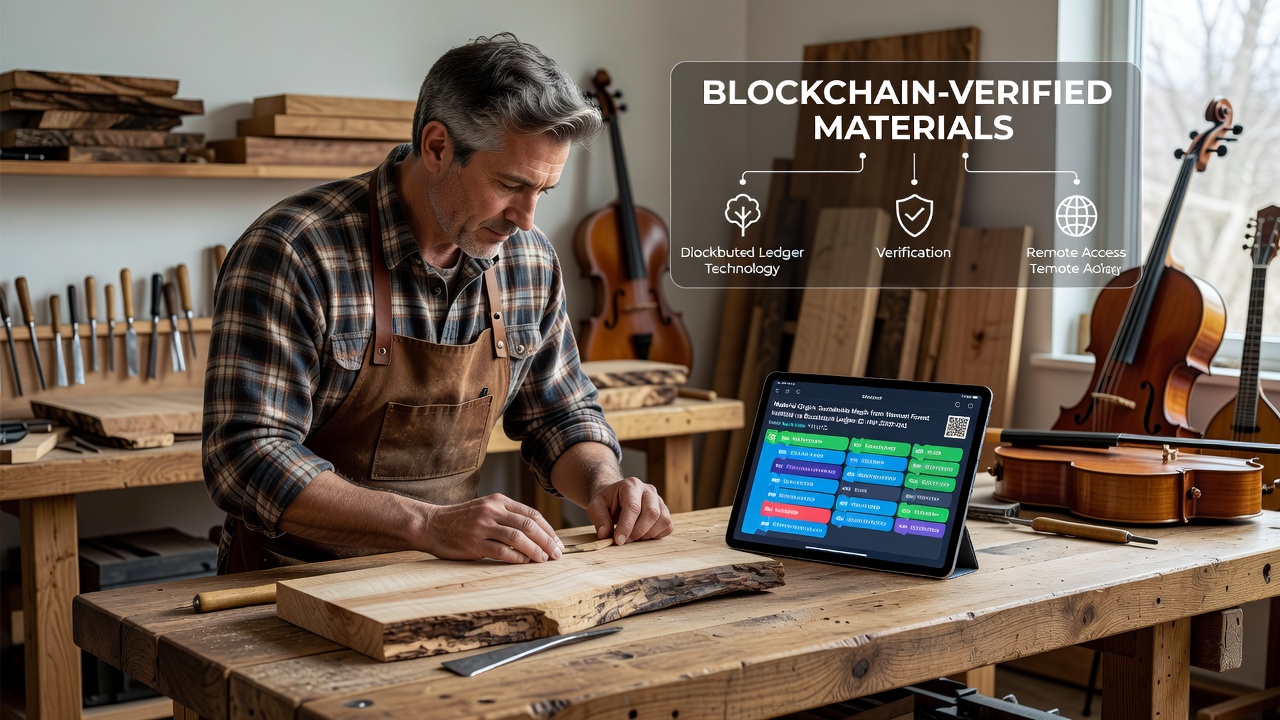
Blockchain technology has entered supply chains for specialty timbers, and remote woodworkers who build niche instruments now access verification tools that track wood origins from forest to workshop. These systems record each transfer of ownership, harvest location, and certification status on distributed ledgers that resist alteration once entries are confirmed. Observers note that this approach addresses long-standing issues with paperwork fraud in international timber trade, particularly for species used in luthiery such as rosewood, ebony, and spruce.
Remote artisans often operate far from certification bodies, yet they require proof that materials comply with regulations like the Lacey Act in the United States or the EU Timber Regulation. Blockchain entries create an immutable chain of custody that buyers and regulators can audit without physical inspection at every stage. Research indicates that platforms developed since 2022 integrate satellite imagery, GPS coordinates, and QR-coded logs to link physical boards back to specific harvest sites.
Supply Chain Tracking in Practice
One documented case involves a cooperative in the Pacific Northwest that supplies Sitka spruce to violin makers across North America. Each log receives a digital token at the mill, and subsequent cuts carry updated records through drying, planing, and shipping. Woodworkers in rural Appalachia scan the tokens upon receipt and confirm that the material matches declared species and origin data. Figures from industry reports show that such systems reduced verification time from weeks to hours for participating workshops.
Similar implementations appear in Southeast Asia, where small-scale mills serving guitar builders in Australia and Canada upload harvest permits and chain-of-custody documents to permissioned blockchains. Those records remain accessible even when internet connectivity is intermittent, because nodes synchronize during scheduled uploads. Data from the Food and Agriculture Organization reveals that traceability projects using distributed ledgers covered over 1.2 million cubic meters of tropical hardwood by mid-2025.
October 2026 Developments
In October 2026, several certification bodies announced updates that require digital ledger integration for high-value species traded across borders. Remote woodworkers preparing for these changes have begun testing mobile apps that connect to public and private blockchains, allowing them to validate incoming shipments before committing to custom builds. The updates align with existing CITES documentation requirements, and early adopters report fewer delays at customs checkpoints when ledger data accompanies physical shipments.
Benefits for Niche Instrument Markets
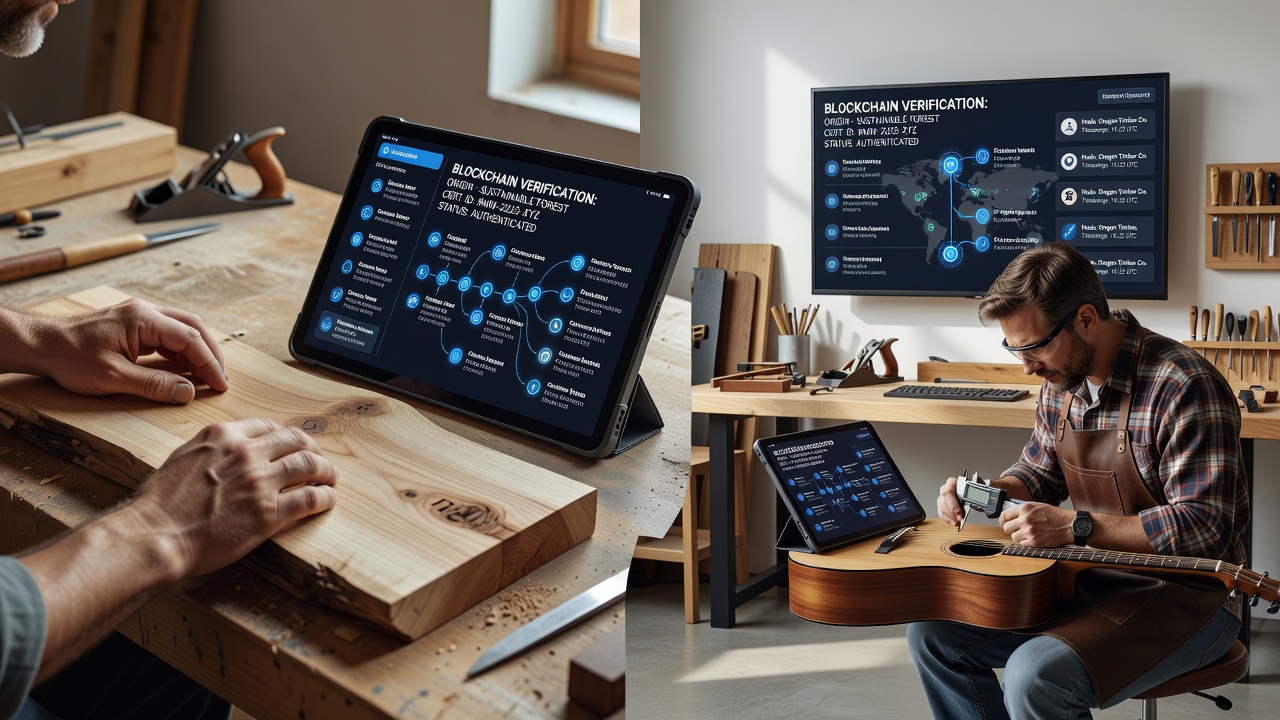
Artisan markets for custom instruments depend on consistent access to legally sourced tonewoods. Blockchain verification gives builders in isolated regions the same documentation advantages previously available only to large manufacturers. Studies conducted by Canadian research institutions found that workshops using ledger-based systems experienced a 34 percent reduction in rejected material claims from clients concerned about sustainability. The same studies noted improved pricing transparency because verified lots command measurable premiums in secondary markets.
Instrument makers also use these records when applying for grants or participating in trade shows that demand proof of ethical sourcing. Because entries are timestamped and geographically tagged, disputes over wood legality become easier to resolve through shared access rather than repeated document exchanges. Observers note that this shared access reduces the administrative burden on woodworkers who already split time between bench work and sourcing.
Technical Integration Challenges
Implementation still requires reliable internet for initial uploads, and some remote areas rely on satellite connections that add cost. Hardware wallets and node software demand basic training, which cooperatives address through regional workshops. Despite these hurdles, adoption continues because the alternative—paper trails prone to loss or forgery—creates greater risk for export-oriented artisans. Reports from Australian forestry agencies highlight that blockchain pilots in eucalyptus supply chains achieved 98 percent data integrity across 18-month test periods.
Conclusion
Blockchain ledgers now form part of the verification infrastructure that supports remote woodworkers supplying niche instrument markets. The technology records material provenance in ways that align with international regulations and buyer expectations. Continued updates scheduled for late 2026 indicate that digital tracking will expand rather than contract in coming years, and woodworkers who integrate these tools gain measurable advantages in documentation speed and acceptance.